What is Android

- Andriod is a popular, open source operating system developed by Google, primarily designed for touchscreen mobile devices like smartphones and tablets.
- It is based on Linux kernal.
- Android provide powerful tools and APIs to developers so that they can make interactive, secure and user friendly applications.
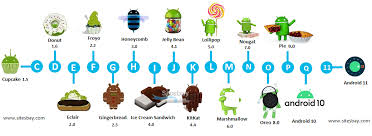
- The major versions of Android include Cupcake, Donut, Eclair, Froyo, Gingerbread, Honeycomb, Ice Cream Sandwich, Jelly Bean, KitKat, Lollipop, Marshmallow, Nougat, Oreo, Pie, and the newer numeric versions such as Android 10, 11, 12, 13, 14, and above.
History of Android
- Android was founded in October 2003 by Andy Rubin, Rich Miner, Nick Sears and Chris White to develop a smart, open-source operating system, initially for cameras then smart phones.
- google acquire Android Inc. in 2005 for $50 million.
- In 2008 first version of Android was launched.
features of Android
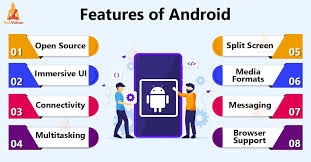
- Android is open source, so developer can modify and improve it.
- It has simple and easy to use touch interface.
- Supports Wi-Fi, bluetooth, NFC ,USB, and mobile hotspot.
- It provide app permissions, play Protect and screen lock options.
Android Architecture
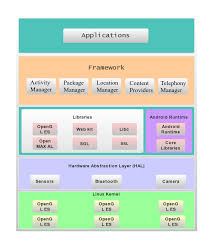
Applications Layer
This is the top layer of Android architecture where all user applications run, such as Phone, Contacts, Browser, and third-party apps. These apps interact with the user and use services provided by the application framework.
Application Framework Layer
This layer provides important system services to applications, such as Activity Manager, Window Manager, Content Providers, and Notification Manager. It acts as a bridge between applications and the lower layers of Android.
Android Runtime (ART) and Native Libraries Layer
Android Runtime (ART) is responsible for executing Android applications, while native libraries (written in C/C++) provide core functionalities like media playback, graphics, database support, and web browsing.
Hardware Abstraction Layer (HAL)
HAL provides a standard interface between Android software and device hardware. It allows Android to communicate with hardware components like camera, Bluetooth, and sensors without directly accessing them.
Linux Kernel Layer
This is the lowest layer of Android architecture. It manages core system functions such as process management, memory management, device drivers, power management, and security, ensuring smooth communication between hardware and software.